Blog
CPCB IV Compliant Generator Suppliers: What to Consider When Choosing a Supplier
Introduction
Emission regulations have changed how diesel generators are built and sold in India. Under norms set by the Central Pollution Control Board (CPCB) and the Ministry of Environment, Forest and Climate Change, newer gensets must meet stricter limits on pollutants. Because these rules affect legality, performance and long-term cost, the supplier you choose matters as much as the machine. This blog covers the factors to weigh when selecting a CPCB IV compliant generator supplier.
Understanding CPCB IV and CPCB IV+ Norms
What the Norms Cover
CPCB IV+ norms apply to new diesel generator sets and limit emissions such as NOx, hydrocarbons, carbon monoxide and particulate matter. They apply to gensets up to 800 kW and are enforced from July 2022, replacing the earlier CPCB II norms.
Why Compliance Is Not Optional
Selling or installing non-compliant new gensets can lead to penalties, and buyers may face difficulty with approvals and inspections. Always confirm the current applicability for your capacity range with your supplier and the latest CPCB notification.
Key Factors to Consider When Choosing a Supplier
1. Valid Certification and Documentation
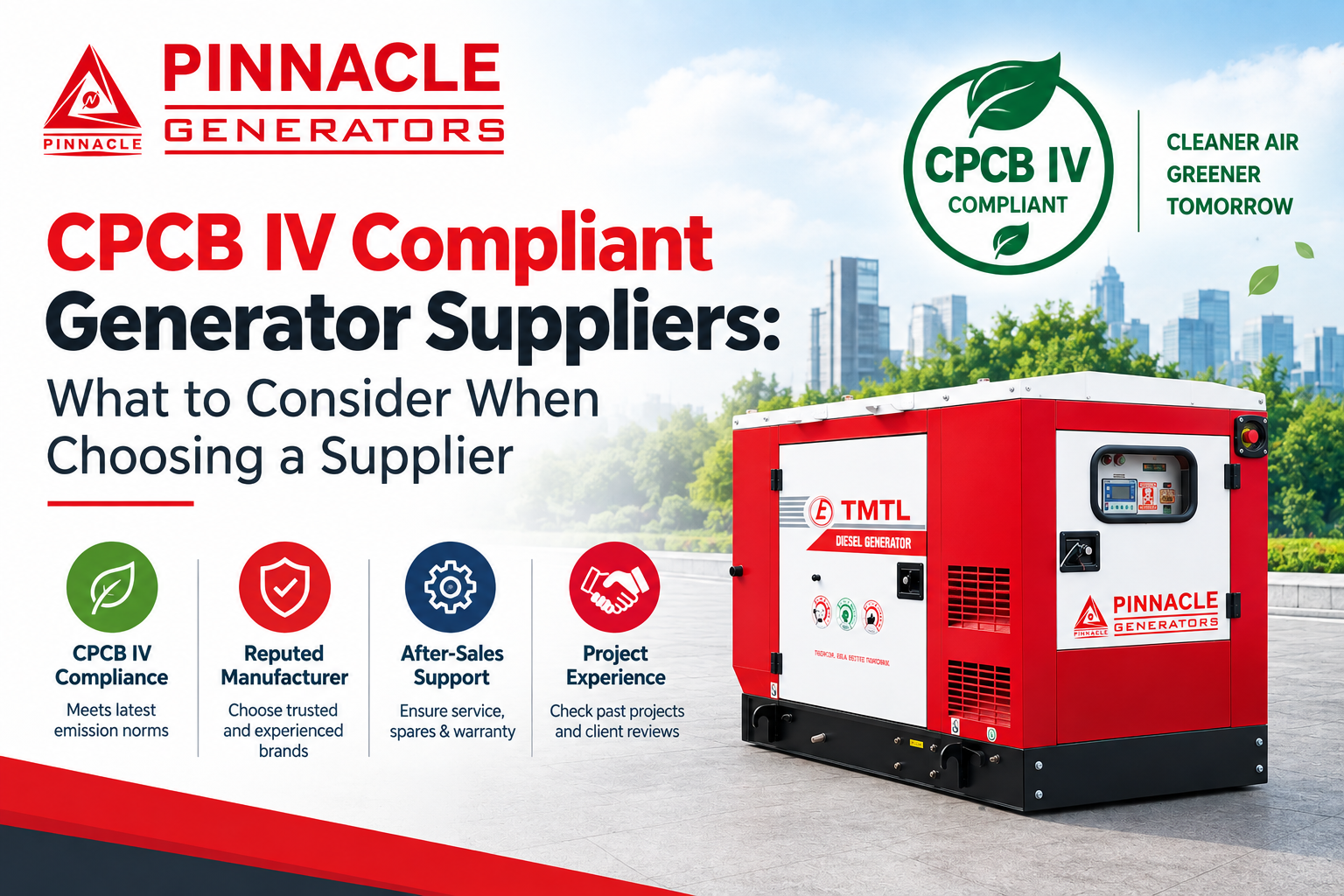
Ask for the type-approval or compliance certificate issued by an authorised testing agency, and check that the certificate matches the exact engine and genset model you are buying. A compliance sticker or label should be present on the set.
2. Engine and Emission Technology
A genuinely compliant genset uses electronically controlled engines and aftertreatment systems. Ask which engine brand is used, how emissions are controlled and what maintenance the system needs.
3. Track Record and Experience
Look for suppliers with proven installations in your industry. Ask for references, case studies and site visits where possible.
4. Range of Capacities
A supplier with a wide kVA range can recommend the best fit instead of pushing whatever is in stock.
5. Genuine Spare Parts Availability
Emission control components need specific parts. Confirm that the supplier stocks original parts and can deliver them quickly.
After-Sales Service and Support
Service Network and Response Time
Check how many service engineers the supplier has near your location, and their typical response time for breakdowns.
Annual Maintenance Contracts (AMC)
An AMC with scheduled preventive visits keeps the set compliant and reliable.
Warranty Terms
Read what is covered, for how long, and what voids it. Ask specifically about emission-control components.
Commercial Considerations
Transparent Pricing
Ask for an itemised quote covering the genset, canopy, panel, installation, transport and taxes.
Delivery and Commissioning
Confirm timelines, who handles installation and testing, and whether commissioning includes a load test.
Total Cost of Ownership
Compare fuel efficiency, service cost and resale value along with the purchase price.
Red Flags to Watch Out For
- Unwillingness to share certificates or test reports
- Prices far below the market with no clear explanation
- Vague answers on engine origin or emission technology
- No local service presence
- Pressure to buy older non-compliant stock
Questions to Ask Before Signing
- Is this exact model CPCB IV+ certified, and can I see the certificate?
- What are the fuel consumption figures at part load?
- What does the warranty cover, and for how long?
- How quickly can a service engineer reach my site?
- Are spare parts and consumables always in stock?
Conclusion
A CPCB IV compliant generator is only as good as the supplier behind it. Verify certification, check the technology, review service capability and compare the full cost of ownership before deciding. Pinnacle Generators can help you evaluate compliant options for your site. Contact our team to discuss your requirements.