

Blog
Generator for Educational Institutions in Hyderabad: A Practical Buying Guide
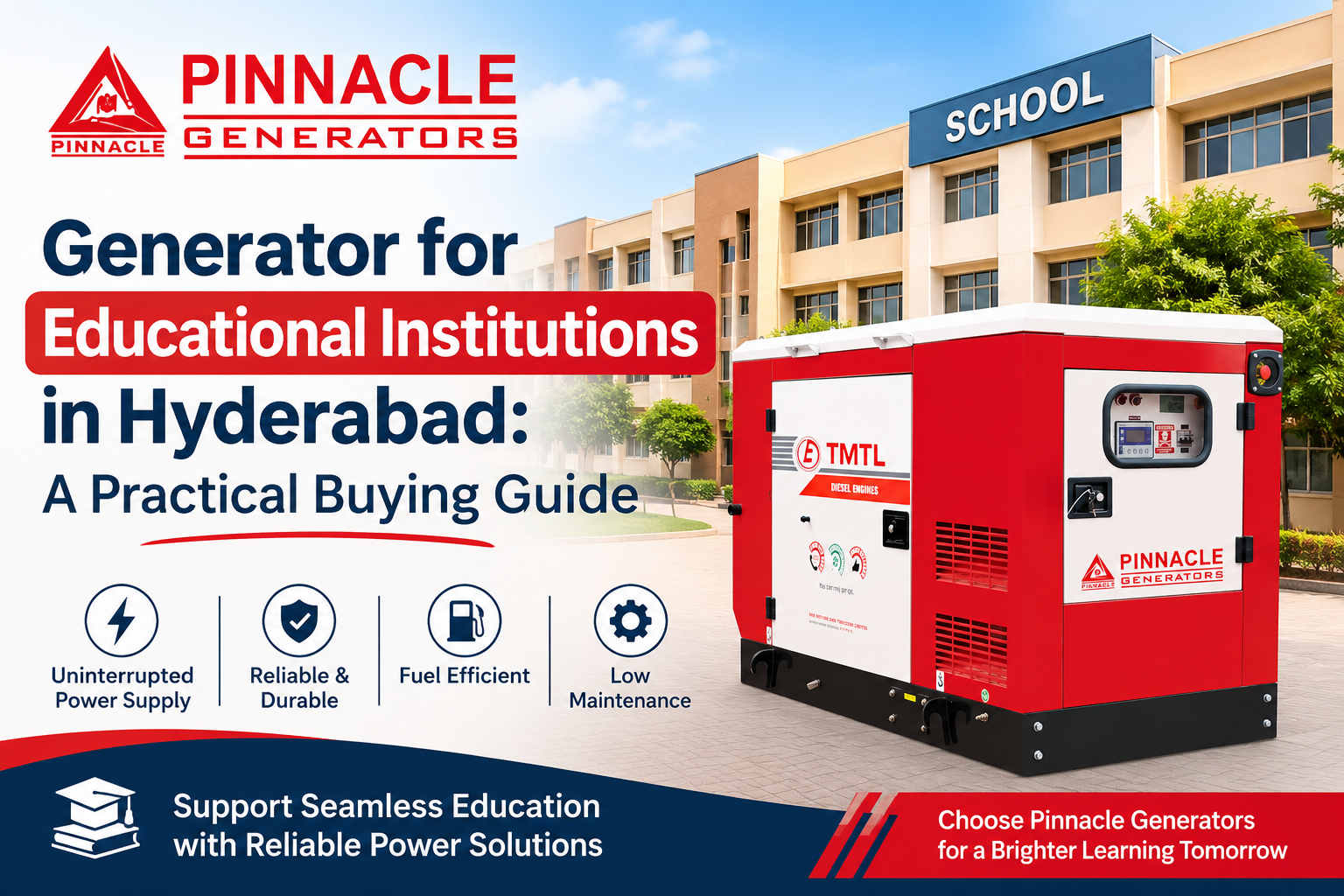
Schools, junior colleges, engineering campuses and universities across Hyderabad run on a tight daily timetable. When the power goes out in the middle of an exam, a smart classroom session or an online lecture, the disruption is immediate. Labs stop, lifts halt, water pumps go quiet and security systems can be left exposed.
A properly selected generator keeps the campus running without drama. This guide explains how educational institutions in Hyderabad can choose a generator that matches their load, respects neighbours and meets environmental norms, so that learning is never interrupted by a power cut.
Why Educational Institutions Need Dependable Backup Power
Protecting Classes, Exams and Digital Learning
Modern classrooms depend on projectors, smart boards, Wi-Fi networks, servers and computer labs. A sudden outage can corrupt data, interrupt online assessments and force a rescheduling of exams that were planned weeks in advance.
Safety and Security on Campus
Lighting, CCTV, fire alarms, access control and public address systems must work at all times, especially in hostels and large campuses where hundreds of students are present. Backup power directly supports student safety.
Hostels, Canteens and Residential Blocks
Residential campuses need continuous supply for water pumping, kitchens, refrigeration and corridor lighting. A generator ensures that daily life on campus is not affected by grid failures.
How to Size a Generator for Your Campus
Calculate Your Essential Load
Begin by listing the equipment that must run during an outage: lights, fans, computer labs, laboratory equipment, pumps, lifts and security systems. Decide whether the generator should power the entire campus or only critical blocks.
Account for Starting Currents
Motors in water pumps, lifts and air conditioners draw a much higher current at start-up than during normal running. The generator must be sized to handle this surge, otherwise voltage dips can trip equipment.
Plan for Future Expansion
Educational institutions grow. New blocks, additional labs and more air conditioning are common. Selecting a set with some spare capacity, or choosing a model that can be paralleled later, avoids premature replacement.
Key Features to Look For
Silent Operation with Acoustic Enclosures
Many Hyderabad campuses sit in residential neighbourhoods. A sound-attenuated canopy keeps noise within permitted limits and avoids disturbing classrooms, hostels and neighbours. Noise norms for diesel generator sets are set by the Central Pollution Control Board, so always ask for a compliant enclosure.
CPCB IV+ Emission Compliance
Diesel generator sets sold in India must meet the prevailing CPCB emission standards. Choosing a CPCB IV+ compliant genset ensures that your institution stays on the right side of regulations and contributes to cleaner air around the campus.
Automatic Mains Failure (AMF) Panels
An AMF or auto-transfer panel starts the generator and shifts the load automatically when the mains fails. This removes the need for a staff member to be present and keeps the changeover almost seamless.
Fuel Efficiency and Running Cost
Campuses may face long outages during summer peaks and storms. A fuel-efficient engine lowers operating cost over the life of the set, which matters for institutions managing tight budgets.
Installation and Safety Considerations
Location and Ventilation
Place the generator away from classrooms and playgrounds, with enough airflow for cooling and a properly routed exhaust. Keep a clear access path for refuelling and servicing.
Earthing, Fire Safety and Fuel Storage
Correct earthing, fire extinguishers and safe diesel storage are essential. Fuel tanks and cabling should be installed according to applicable electrical and safety codes by qualified technicians.
Staff Training
Maintenance staff should know how to read the control panel, check oil and coolant levels and respond to basic alarms. A short training session at commissioning is a worthwhile investment.
Maintenance and After-Sales Support
A generator that runs only during outages can still develop problems if it sits idle. Regular weekly test runs, scheduled oil and filter changes and an annual maintenance contract keep the set ready. Choose a supplier with a local service network in Hyderabad so that technicians can reach your campus quickly.
Choosing the Right Supplier
Look for a supplier who surveys your site, studies your load and recommends a solution rather than simply quoting a price. Ask about warranty terms, spare parts availability, service response time and references from similar institutions. Pinnacle Generators works with institutional customers to match genset capacity, enclosure and control systems to real campus requirements.
Frequently Asked Questions
How much does it cost to run a campus generator?
Running cost depends on load, running hours and fuel price. A fuel-efficient set operating at a sensible load percentage costs far less per unit of power than an oversized one, so correct sizing matters more than any other factor.
Can one generator serve several buildings?
Yes, provided the distribution is planned properly. Many campuses use a central genset with separate feeders for each block, or several smaller sets placed near major loads.
Conclusion
For schools, colleges and universities in Hyderabad, a generator is not a luxury but a basic part of campus infrastructure. By sizing it correctly, insisting on silent and CPCB IV+ compliant models, installing it safely and maintaining it regularly, institutions can protect classes, exams and student safety from unexpected outages.
If you are planning a new installation or an upgrade, speak to the team at Pinnacle Generators for a site assessment and a recommendation tailored to your campus.