

Blog
Generator for Warehouses in Hyderabad: Power Solutions for Logistics and Storage
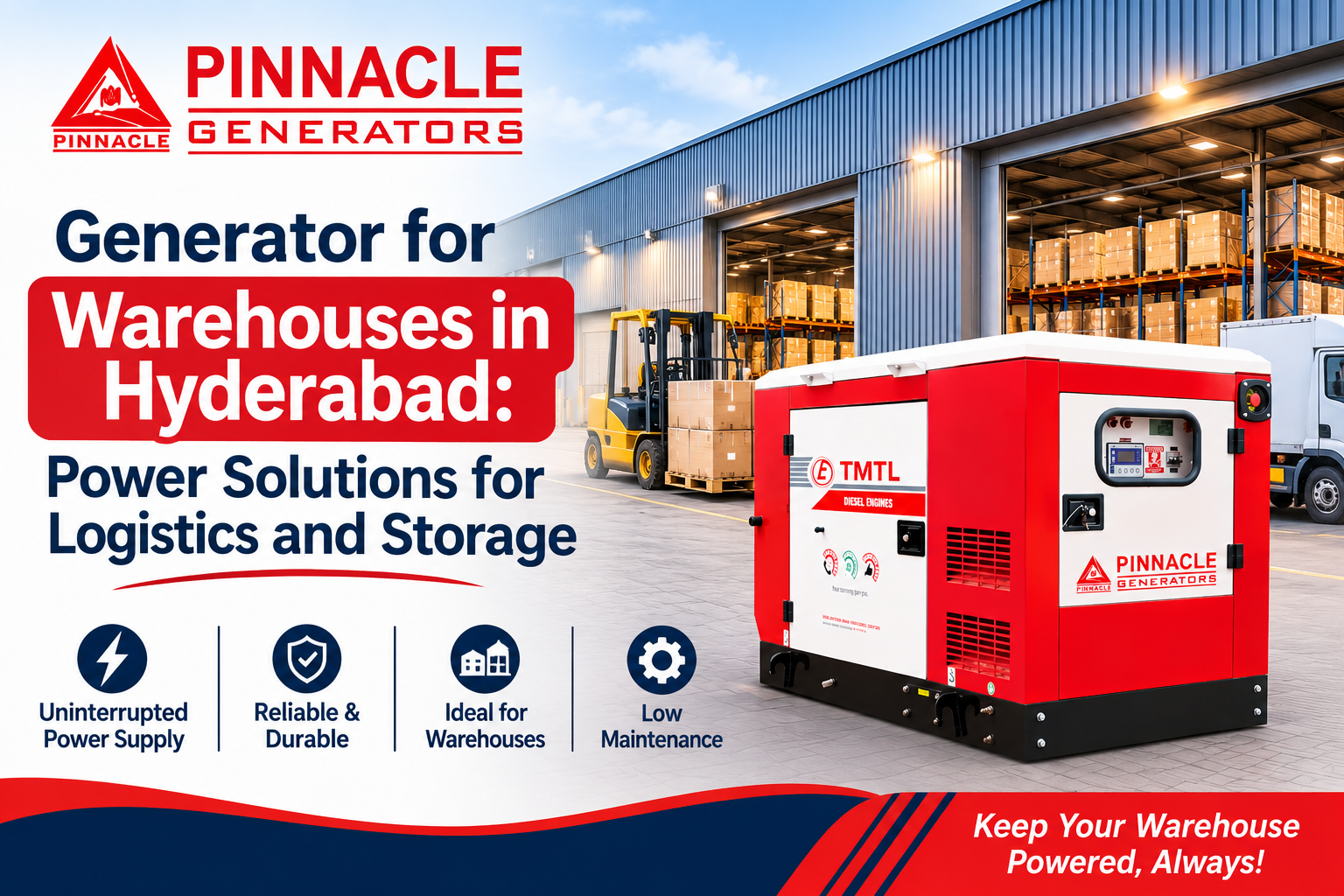
Hyderabad has grown into a major logistics and distribution hub, with warehouses and fulfilment centres spread across Medchal, Shamshabad, Patancheru, Bibinagar and other industrial belts. These facilities handle e-commerce orders, pharmaceuticals, food products and industrial goods, and all of them depend on uninterrupted electricity.
When power fails, conveyors stop, loading docks go dark and cold rooms begin to warm. A well-chosen diesel generator protects stock, keeps staff safe and ensures that deliveries leave on time.
Why Warehouses Cannot Afford Power Interruptions
Protecting Stock and Inventory
Warehouses storing food, medicines or temperature-sensitive items rely on refrigeration. A prolonged outage can spoil goods worth far more than the cost of a generator.
Keeping Dispatch on Schedule
Order processing, barcode scanners, warehouse management software and sorting equipment all need power. Delays at the dock affect delivery commitments and customer relationships.
Safety and Security
Large warehouses need continuous lighting, fire detection, CCTV and access control. Darkness in a facility full of racking and forklifts is a serious safety risk.
Understanding Your Warehouse Load
Common Power Consumers
Typical loads include high-bay lighting, dock levellers, conveyors, forklift charging stations, office air conditioning, IT systems, cold storage compressors and water pumps for fire fighting.
Prioritising Critical Circuits
Not every circuit needs backup. Many warehouses choose to power lighting, IT, cold rooms, fire systems and a portion of material handling. This keeps the required generator capacity, and the cost, sensible.
Allowing for Motor Starting Loads
Compressors and large motors draw several times their running current when starting. The generator and its alternator must handle these surges without major voltage dips.
Choosing the Right Generator Specification
Capacity and Configuration
Warehouses may need a single large set or several smaller sets operating together. Multiple sets provide redundancy, so that maintenance on one unit does not leave the facility unprotected.
Fuel Efficiency and Tank Capacity
Warehouses often run for long hours during outages. An efficient engine and a base fuel tank that supports extended running reduce refuelling frequency and cost.
CPCB IV+ Compliance
New diesel generator sets need to meet current emission norms. Choosing a CPCB IV+ model also helps warehouse operators who are working with large e-commerce and logistics clients that prefer environmentally responsible vendors.
Acoustic Enclosures and Weatherproof Canopies
Even in industrial areas, noise control matters for staff comfort and compliance. Weatherproof canopies protect the set from dust, heat and monsoon rain.
Installation Best Practices
Siting and Ventilation
Install the generator outside the main storage area, with adequate airflow and safe exhaust discharge. Keep it away from combustible stock and ensure vehicles have clear access for fuel delivery.
Electrical Integration
An auto-transfer panel connects the generator to the warehouse distribution board. Proper cabling, earthing and protection devices should be designed by qualified engineers.
Fire Protection
Keep fire extinguishers close by, store diesel safely and follow the fire safety norms that apply to your facility.
Maintenance for Long-Term Reliability
Warehouse generators may sit idle for weeks. Weekly test runs, regular oil and filter changes, battery checks and an annual maintenance contract keep them ready for the day they are needed. Because dust is common in industrial belts, air filter checks are especially important. Record every service and test run so that problems can be spotted early.
Selecting a Reliable Supplier in Hyderabad
Look for a supplier who studies your load, explains options clearly and provides installation and servicing locally. Compare warranty terms, service response times and parts availability. Ask whether the supplier can support future expansion if your warehouse grows or adds cold storage. Pinnacle Generators helps warehouse and logistics operators select a genset that suits their actual operating pattern.
Planning for Special Warehouse Needs
Cold Storage and Pharma Warehousing
Facilities storing medicines, vaccines or perishables should consider redundancy, so that a second set can take over if one needs servicing. Temperature excursions can be expensive, so the generator should be treated as part of the cold chain.
Automated Material Handling
Warehouses with automated sorters and conveyors are sensitive to voltage dips and restarts. Discuss soft starters and sequential load transfer with your supplier so that equipment restarts smoothly after changeover.
Multi-Tenant Logistics Parks
Where several tenants share a park, a common generator yard with metered feeders can be more economical than individual sets. This needs clear agreements on fuel, maintenance and billing.
Budgeting Sensibly
Consider purchase price, fuel, service and the cost of downtime together. A well-sized generator with a maintenance contract usually costs far less than a single serious spoilage or missed dispatch.
Conclusion
In logistics, time and temperature are everything. A properly sized, CPCB IV+ compliant and well-maintained generator protects stock, keeps dispatch on schedule and safeguards your workforce. For warehouse owners in Hyderabad, investing in the right backup power is a practical way to reduce risk.
Get in touch with Pinnacle Generators to arrange a load assessment and receive a recommendation for your facility.