

Blog
CPCB-IV Emission Norm Gensets Suppliers in India: What Buyers Should Know
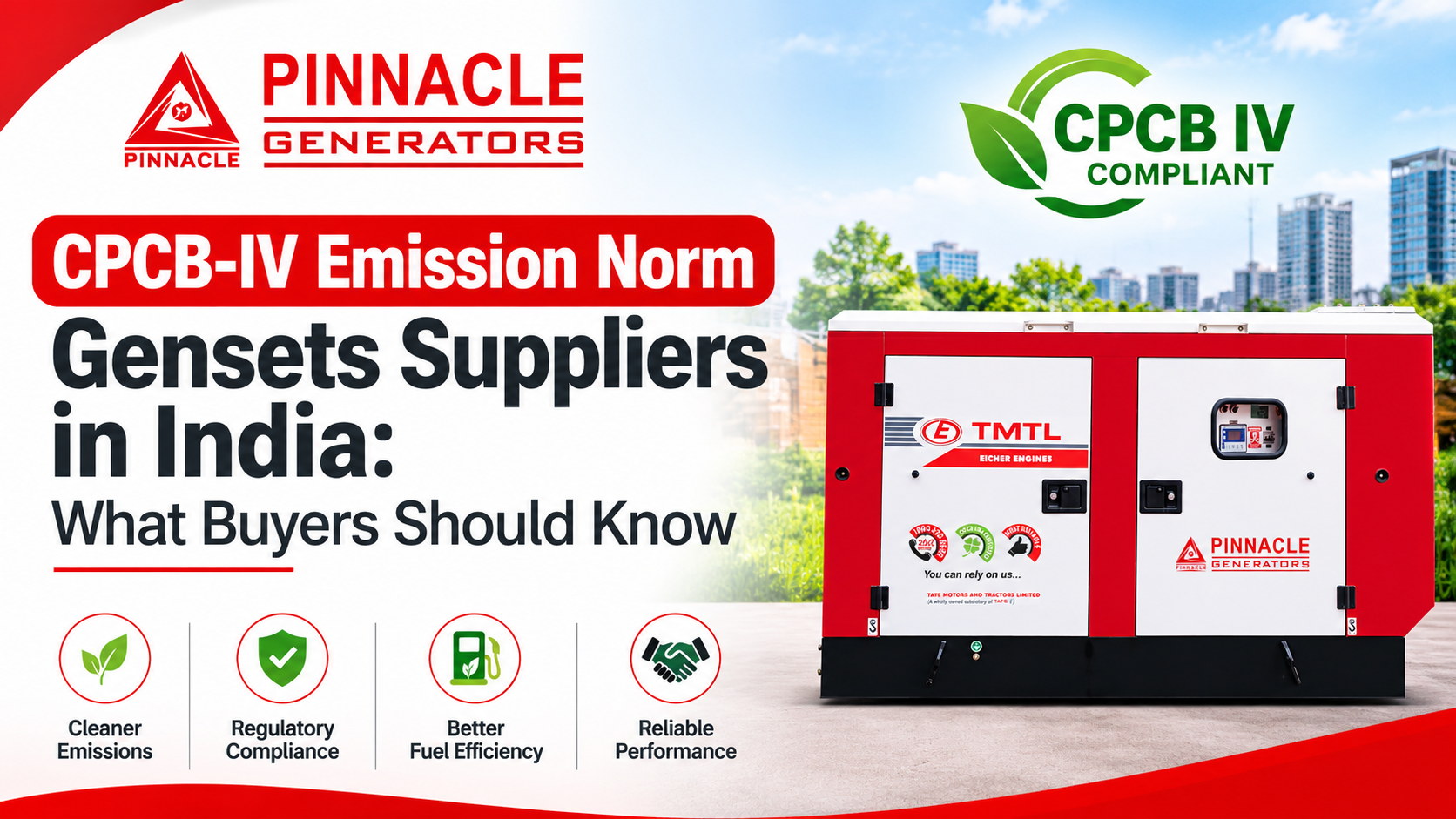
Air quality has become a central concern for Indian cities, and diesel generator sets are among the sources that regulators have tightened rules on. The Central Pollution Control Board (CPCB) has introduced successive emission standards for gensets, and the latest generation is commonly referred to as CPCB IV or CPCB IV+.
For businesses, hospitals, offices and industries, buying a compliant genset is no longer optional. This guide explains what the norms mean, how to check that a product meets them and what to look for in a supplier.
Understanding CPCB-IV Emission Norms
What Are CPCB Norms for Gensets?
CPCB emission norms set limits on pollutants released by diesel generator sets, including particulate matter, nitrogen oxides, hydrocarbons and carbon monoxide. They apply to new gensets manufactured and sold in India and replace earlier, less stringent standards.
From CPCB II to CPCB IV+
Earlier gensets followed CPCB II norms. Over time, regulators moved to cleaner standards, and diesel gensets in the applicable power range are now required to meet CPCB IV+ norms. Buyers should confirm the current applicability and power range with the supplier and the latest CPCB notifications before purchase.
Why the Change Matters
Cleaner engines reduce visible smoke and harmful emissions, which benefits both the environment and the people living and working near the installation. Compliance also reduces regulatory risk for the buyer.
How CPCB IV+ Gensets Work Differently
Advanced Engine Technology
Meeting the norms typically involves electronically controlled fuel injection, improved combustion and exhaust after-treatment systems. These changes cut emissions while maintaining performance.
After-Treatment Systems
Many CPCB IV+ engines use systems such as diesel particulate filters and selective catalytic reduction. Some of these require urea-based fluid or specific maintenance, so operators should understand the running requirements.
Fuel Quality Considerations
Modern engines are sensitive to fuel quality. Using clean, good-grade diesel protects the engine and the after-treatment components.
Benefits of Choosing a CPCB IV+ Genset
Regulatory Compliance
A compliant set helps businesses avoid problems with approvals, inspections and tenders that specify environmental standards.
Lower Emissions and Cleaner Operation
Reduced emissions support corporate sustainability goals and help cities improve air quality.
Fuel Efficiency and Smooth Performance
Electronic controls often provide better fuel management, quieter running and more stable output, which suits sensitive loads such as IT and healthcare equipment.
How to Verify Compliance Before Buying
Ask for Certification
Request the type approval or certification documents issued by authorised testing agencies and the engine manufacturer’s compliance details. Check that the model number on the paperwork matches the model being supplied.
Check the Genset Labelling
Compliant gensets carry identification plates and documentation showing their emission norm. Verify these on delivery.
Confirm Warranty and Service Terms
After-treatment systems and electronic controls need competent servicing. Confirm what the warranty covers and who will carry out maintenance.
Choosing a Genset Supplier in India
Technical Knowledge
A good supplier can explain the norm, recommend the right capacity and discuss operating requirements honestly.
Product Range
Look for suppliers offering a wide range of capacities so that you can match the set to your actual load rather than buy too much or too little.
Service Network and Spare Parts
Check whether the supplier provides installation, commissioning, annual maintenance and quick spare parts support in your city. Strong after-sales service protects your investment over its lifetime.
Transparent Pricing
Compare quotations on the same basis, including enclosure, panel, installation, delivery and taxes. Be cautious about unusually low offers that may omit important items.
Common Mistakes to Avoid
Many buyers choose only on price, ignore after-treatment maintenance or fail to verify certification. Others buy a set larger than necessary, leading to wet stacking and higher running costs. A site assessment and load calculation avoid these problems.
Frequently Asked Questions
Can I still use an older CPCB II genset?
Rules on existing equipment and new sales differ, and they have changed over time. Check the latest CPCB and state pollution control board guidance for your situation, and consult your supplier before buying or replacing.
Do CPCB IV+ gensets cost more?
They usually cost more upfront because of advanced engines and after-treatment systems. Many buyers find the cleaner operation, better fuel management and regulatory certainty worthwhile.
Is urea always required?
Not every engine design uses it. Requirements depend on the engine technology, so ask the supplier exactly what consumables and servicing your chosen model needs.
Can compliant gensets be used with solar or hybrid systems?
Often yes, with the right controls. Hybrid setups can reduce diesel running hours, and your supplier can advise on integration.
Conclusion
CPCB IV and IV+ norms have raised the standard for diesel generator sets in India. By understanding what the norms require, verifying certification and choosing a supplier with technical knowledge and service reach, buyers can invest in backup power that is dependable, compliant and efficient.
Pinnacle Generators can help you select a CPCB IV+ compliant genset suited to your requirement. Contact the team for guidance and a detailed quotation.