Blog
Backup Generators for Commercial Complexes: Key Factors to Consider
Introduction
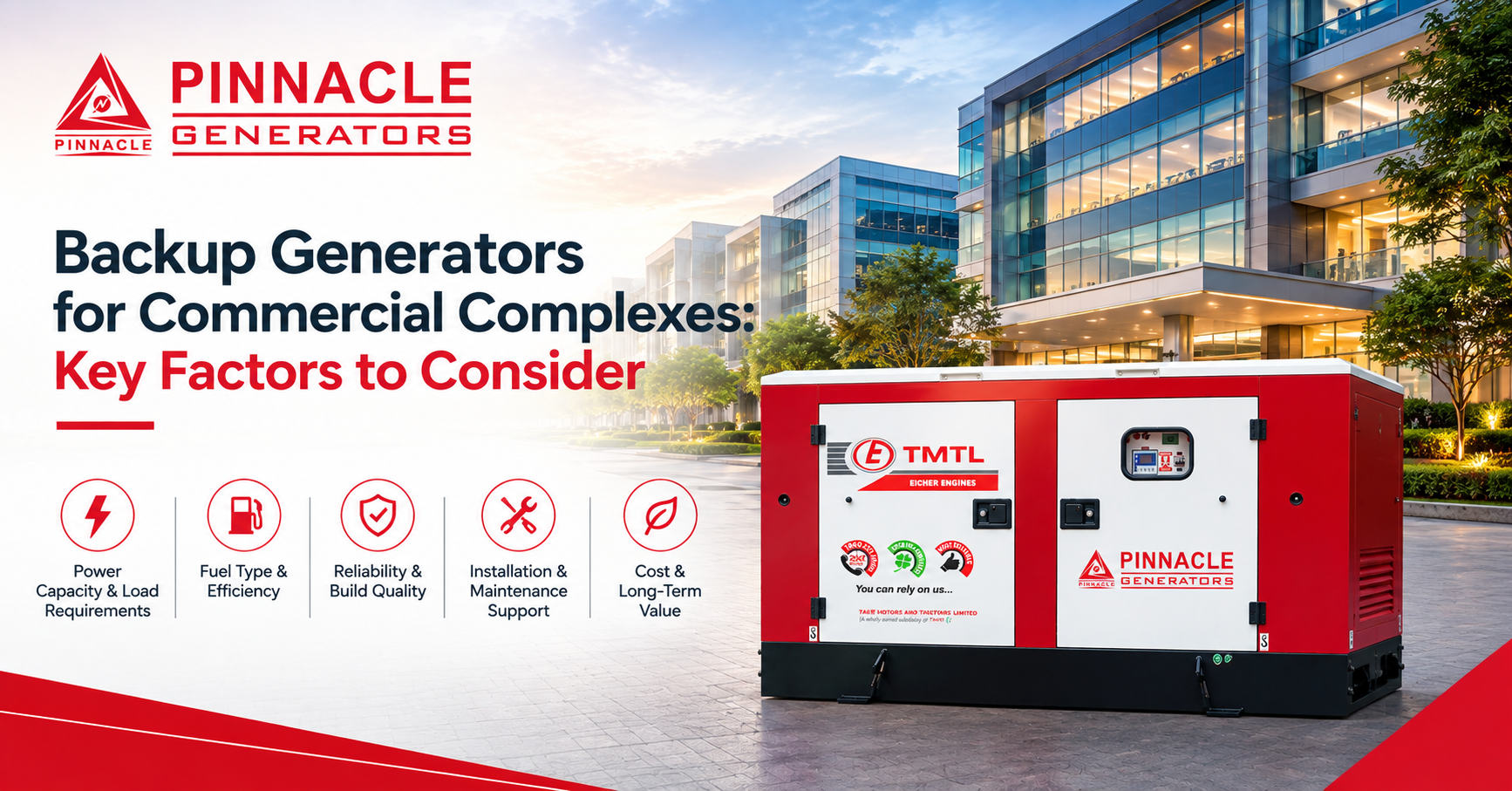
Commercial complexes — office buildings, malls, mixed-use developments, and business parks — house multiple tenants with varied power requirements under one roof. A single power outage can affect dozens of businesses simultaneously, making backup generator planning a shared responsibility that needs to be handled carefully. This guide covers the key factors facility managers and building owners should weigh when selecting backup generators for commercial complexes.
Understanding the Diversity of Loads
Unlike a single-purpose facility, a commercial complex typically supports a mix of loads: common area lighting, lifts and escalators, HVAC systems, fire and life-safety equipment, individual tenant office loads, and sometimes retail or F&B outlets with their own equipment. Planning backup power means deciding upfront which of these loads absolutely need continuous power and which can tolerate a short interruption.
Key Factors to Evaluate
- Total connected load vs. essential load: Most commercial complexes back up only essential services (lifts, common lighting, fire systems, select tenant loads) rather than the entire building, which significantly affects generator sizing.
- Scalability: As occupancy grows or additional tenants move in, the backup power system should ideally allow for capacity expansion without a complete overhaul.
- Space and installation constraints: Commercial buildings often have limited space for generator rooms or rooftop installations, which affects the choice between a single large DG set and multiple smaller units.
- Noise and emission norms: Complexes located in mixed residential-commercial zones need to factor in local noise regulations and CPCB emission compliance, especially where generators may run during business hours.
- Fuel storage and logistics: Adequate diesel storage, refuelling access, and safety compliance for fuel storage need to be planned at the design stage, not as an afterthought.
- Metering and cost allocation: In multi-tenant buildings, there should be a clear system for metering generator usage so costs can be fairly distributed among tenants.
Single Large Genset vs. Multiple Smaller Units
Larger complexes often face a choice between installing one large-capacity DG set or multiple smaller units working in parallel. A parallel configuration offers redundancy — if one unit needs servicing, others can continue supplying power — and allows the system to run more efficiently at partial loads, since only as many units as needed are activated at a given time. A single large unit can be simpler to maintain but creates a single point of failure.
Maintenance in a Multi-Stakeholder Environment
Because commercial complexes typically involve a facility management company, building owner, and multiple tenants, maintenance schedules need clear communication so that generator testing and servicing don’t catch tenants off guard. A structured AMC with defined response times for breakdowns is particularly important given the number of businesses that depend on the same backup system.
Conclusion
Backup power for commercial complexes is as much about planning and coordination as it is about hardware. At Pinnacle Generators, we help facility managers assess essential loads, choose between single and parallel DG configurations, and put a maintenance structure in place that keeps tenants powered reliably. Get in touch with our team to plan backup power for your commercial property.