Blog
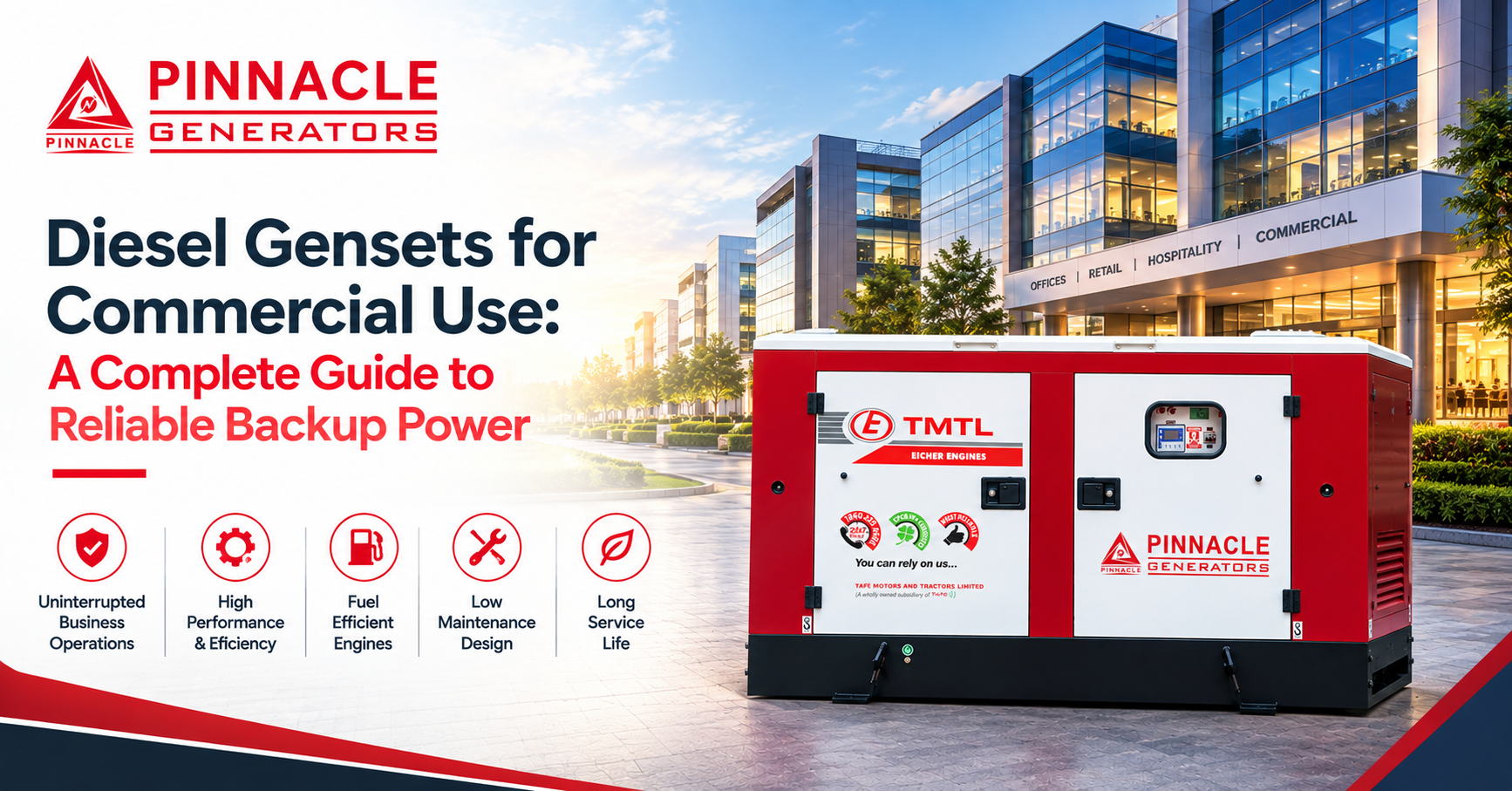
Diesel Gensets for Commercial Use: A Complete Guide to Reliable Backup Power
Introduction
Diesel generator sets remain the most widely used backup power solution for commercial establishments in India, valued for their reliability, fuel availability, and ability to handle heavy loads for extended periods. Whether you run a retail outlet, office, warehouse, or service business, understanding how diesel gensets work and what to look for helps you make a more informed investment. This guide walks through the essentials of diesel gensets for commercial use.
How a Diesel Genset Works
A diesel generator set converts the chemical energy in diesel fuel into mechanical energy via an internal combustion engine, which then drives an alternator to produce electrical power. Commercial gensets typically include an automatic transfer switch that detects a mains power failure and starts the generator within seconds, restoring power to connected loads with minimal disruption.
Types of Diesel Gensets for Commercial Use
- Open/skid-mounted gensets: More economical, typically used where noise isn’t a major concern, such as certain industrial or outdoor installations.
- Silent (acoustic enclosure) gensets: Housed in sound-attenuated enclosures, suited for offices, hospitals, hotels, and any location near occupied spaces.
- Prime power gensets: Designed to run for extended hours as a primary power source, common in areas with unreliable grid supply.
- Standby gensets: Designed for occasional, shorter-duration use during outages, typically sized for a lower average load factor than prime power units.
Choosing the Right Capacity
Sizing a genset correctly starts with a load audit — listing every piece of equipment that needs backup power along with its running and starting (inrush) current. Motors, compressors, and HVAC equipment often draw significantly more current at startup than during normal running, and this peak demand needs to be factored into sizing to avoid overloading the generator. It’s common practice to size the genset with some additional headroom above the calculated peak load to accommodate future expansion.
Fuel Efficiency and Running Costs
Running costs are a major consideration for commercial users, especially where the genset may see regular use rather than occasional standby duty. Factors that affect fuel efficiency include engine load factor (gensets are generally most efficient when run closer to 70–80% of rated capacity rather than very lightly loaded), engine maintenance condition, and fuel quality. Choosing a genset that’s appropriately sized, rather than oversized as a precaution, has a direct impact on long-term fuel costs.
Compliance and Safety
- Ensure the genset meets current CPCB emission norms applicable to its capacity range.
- Follow local noise pollution control regulations, particularly for units installed in mixed-use or residential-adjacent areas.
- Install proper exhaust routing and acoustic treatment where required by local regulations.
- Maintain safe diesel storage practices in line with fire safety and petroleum storage regulations.
Conclusion
A well-chosen diesel genset can provide dependable backup power for years with proper sizing, maintenance, and compliance. At Pinnacle Generators, we guide commercial customers through load assessment, capacity selection, and after-sales support to ensure their backup power investment performs reliably when it’s needed most. Talk to our team to find the right diesel genset for your business.