Blog
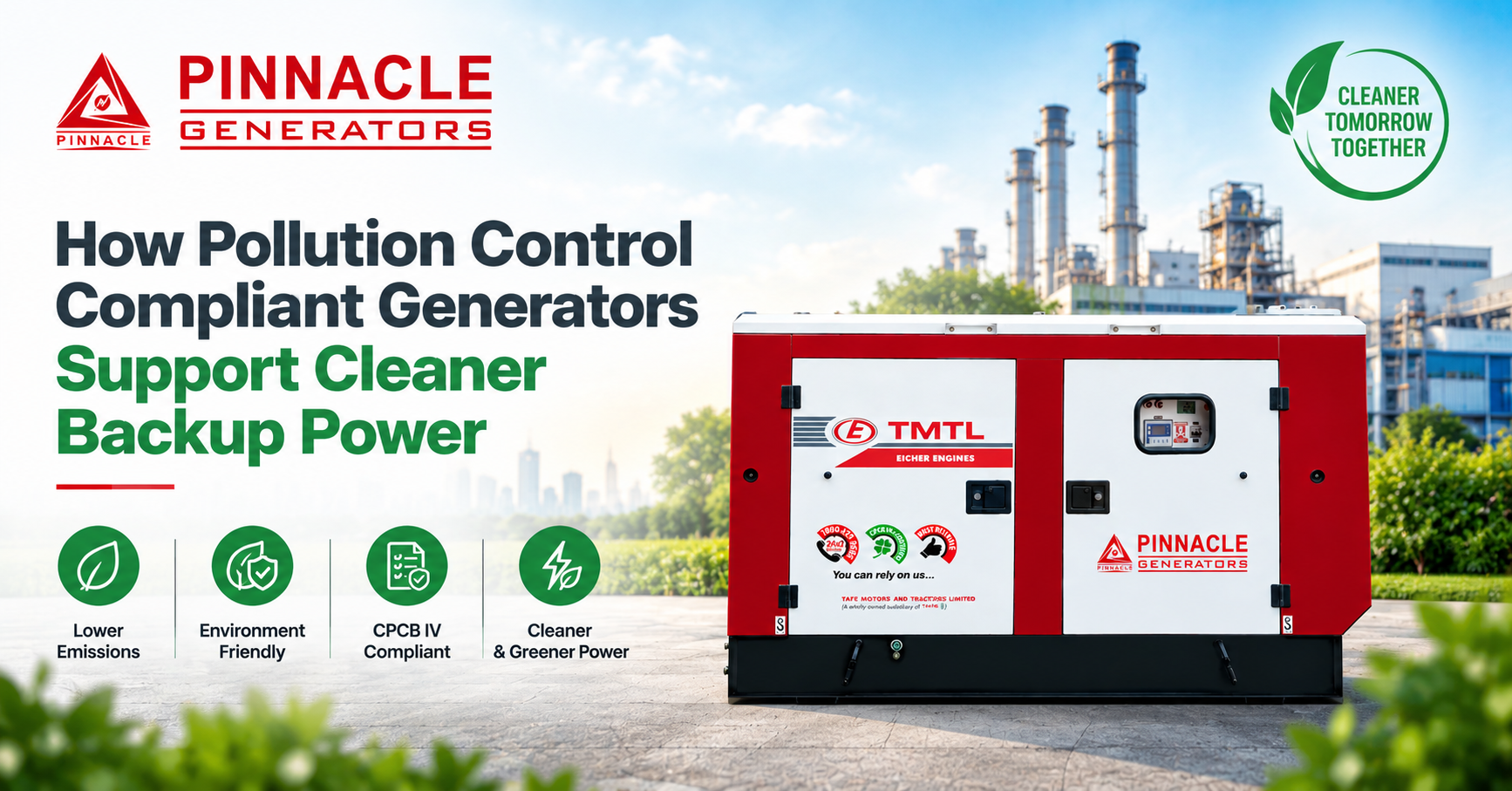
How Pollution Control Compliant Generators Support Cleaner Backup Power
Introduction
As diesel generators remain a critical part of India’s backup power infrastructure, emission compliance has become just as important as reliability and capacity. The Central Pollution Control Board (CPCB) has progressively tightened emission norms for diesel gensets, pushing manufacturers and users toward cleaner-running equipment. This blog explains why pollution control compliance matters and how it shapes the backup generators used across commercial and industrial India today.
Why Emission Norms for DG Sets Exist
Diesel generators, when run without emission controls, release pollutants including particulate matter, nitrogen oxides (NOx), carbon monoxide, and hydrocarbons. In areas with a high density of gensets — commercial complexes, industrial clusters, and cities with frequent power cuts — cumulative emissions from these units can meaningfully affect local air quality. CPCB emission norms set maximum permissible limits for these pollutants based on generator capacity, and compliance is intended to reduce this cumulative impact as backup generator usage continues to grow.
What Compliance Looks Like in Practice
- Engine design: Compliant gensets use engines engineered to control combustion more precisely, reducing pollutant formation at the source.
- Emission control components: Depending on the compliance stage, this can include improved fuel injection systems and exhaust after-treatment technologies.
- Certification and labelling: Compliant generators carry certification indicating the CPCB norm they meet, which buyers should verify before purchase, particularly for capacity ranges where norms have recently changed.
- Fuel quality considerations: Meeting emission targets consistently also depends on using fuel that meets the specified quality standards for the engine.
Benefits Beyond Regulatory Compliance
While avoiding penalties and ensuring legal operation is the immediate reason to choose compliant generators, there are practical benefits too. Compliant engines are often more fuel-efficient due to improved combustion design, and many facilities — particularly hospitals, IT parks, and businesses with sustainability commitments — increasingly treat emission compliance as part of their broader environmental responsibility, not just a regulatory checkbox.
What Buyers Should Check Before Purchasing
- Confirm the specific CPCB norm the generator is certified to, and check that it’s the current applicable standard for its capacity range at the time of purchase.
- Ask for supporting certification documentation from the manufacturer, not just a verbal assurance.
- Check whether local pollution control authorities require any additional registration or approval for installing and operating the generator at your site.
- Factor in that older, non-compliant gensets may face restrictions or require retrofitting as norms continue to evolve.
Conclusion
Pollution control compliant generators are no longer just a regulatory requirement — they represent a meaningful step toward cleaner backup power as diesel gensets continue to play a central role in India’s power reliability. At Pinnacle Generators, we supply gensets certified to current CPCB norms and can help you verify compliance requirements specific to your location and industry. Speak with our team to choose a generator that keeps your operations both compliant and efficient.